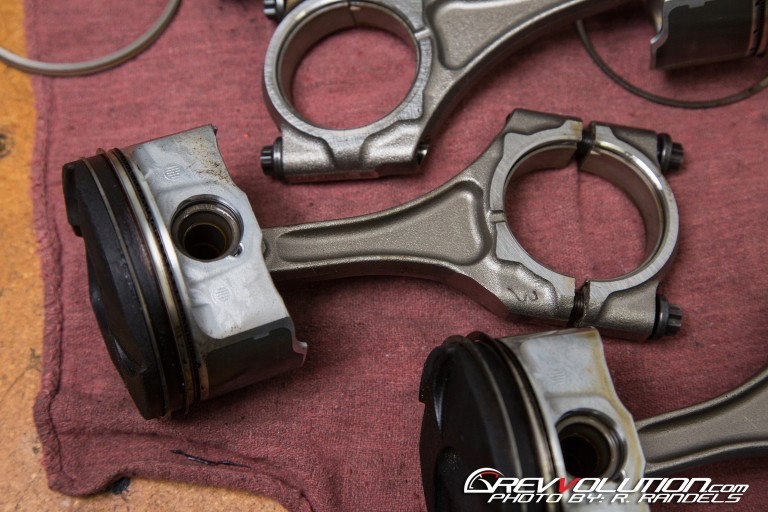
Är i förväg med planeringarna inför säsong 2017 nu, men ville gärna ha lite synpunkter nu redan känner jag.
Så till mina funderingar

Skulle Jätte gärna slipa överladda min FA20 och fortsätta på original konceptet att köra N/A.
Men vill första ha lite synpunkter från motor gurus här om det äns är värt de ekonomiskt, eller om effekt register ökning är så försumbar att överladdning är enda utvägen!!
I dax läget har jag bromsat 193whp på e85, kan hända att de är lite mer nu och blir någon till vid nästa mappning i vår, men i regel är de stop vid strax över 200whp med original motor men hoppas kunna fixa lite bättre mellan register.
effekt kurva 2015


Då till lite info om motorn i sig.
Key features of the FA20 engine included:
An open deck design (i.e. the space between the cylinder bores at the top of the cylinder block was open);
An aluminium alloy block and cylinder head;
Double overhead camshafts;
Four valves per cylinder with variable inlet and exhaust valve timing;
Direct and port fuel injection systems;
Compression ratio of 12.5:1; and,
7450 rpm redline.
FA20/4U-GSE block
The FA20/4U-GSE engine had an aluminium alloy block with 86.0 mm bores and an 86.0 mm stroke for a capacity of 1998 cc. Within the cylinder bores, the FA20 engine had cast iron liners.
Cylinder head: camshaft and valves
The FA20 engine had an aluminium alloy cylinder head with chain-driven double overhead camshafts. The four valves per cylinder - two intake and two exhaust - were actuated by roller rocker arms which had built-in needle bearings that reduced the friction that occurred between the camshafts and the roller rocker arms (which actuated the valves). The hydraulic lash adjuster - located at the fulcrum of the roller rocker arm - consisted primarily of a plunger, plunger spring, check ball and check ball spring. Through the use of oil pressure and spring force, the lash adjuster maintained a constant zero valve clearance.
Valve timing: D-AVCS and Dual VVT-i
To optimise valve overlap and utilise exhaust pulsation to enhance cylinder filling at high engine speeds, the FA20 engine had variable intake and exhaust valve timing, known as Subaru's 'Dual Active Valve Control System' (D-AVCS) or Toyota's 'Dual Variable Valve Timing - intelligent' (Dual VVT-i).
For the FA20 engine, the intake camshaft had a 60 degree range of adjustment (relative to crankshaft angle), while the exhaust camshaft had a 54 degree range. For the FA20 engine,
Valve overlap ranged from -33 degrees to 89 degrees (a range of 122 degrees);
Intake duration was 255 degrees; and,
Exhaust duration was 252 degrees.
FA20 Valve Timing
Intake Open -24° to 44° BTDC
Close 99° to 31° ABDC
Exhaust Open 81° to 27° BBDC
Close -9° to 45° ATDC
The camshaft timing gear assembly contained advance and retard oil passages, as well as a detent oil passage to make intermediate locking possible. Furthermore, a thin cam timing oil control valve assembly was installed on the front surface side of the timing chain cover to make the variable valve timing mechanism more compact. The cam timing oil control valve assembly operated according to signals from the ECM, controlling the position of the spool valve and supplying engine oil to the advance hydraulic chamber or retard hydraulic chamber of the camshaft timing gear assembly.
To alter cam timing, the spool valve would be activated by the cam timing oil control valve assembly via a signal from the ECM and move to either the right (to advance timing) or the left (to retard timing). Hydraulic pressure in the advance chamber from negative or positive cam torque (for advance or retard, respectively) would apply pressure to the advance/retard hydraulic chamber through the advance/retard check valve. The rotor vane, which was coupled with the camshaft, would then rotate in the advance/retard direction against the rotation of the camshaft timing gear assembly - which was driven by the timing chain - and advance/retard valve timing. Pressed by hydraulic pressure from the oil pump, the detent oil passage would become blocked so that it did not operate.
When the engine was stopped, the spool valve was put into an intermediate locking position on the intake side by spring power, and maximum advance state on the exhaust side, to prepare for the next activation.
Intake and throttle
The intake system for the Toyota 86 and Subaru BRZ included a 'sound creator', damper and a thin rubber tube to transmit intake pulsations to the cabin. When the intake pulsations reached the sound creator, the damper resonated at certain frequencies. According to Toyota, this design enhanced the engine induction noise heard in the cabin, producing a 'linear intake sound' in response to throttle application.
In contrast to a conventional throttle which used accelerator pedal effort to determine throttle angle, the FA20 engine had electronic throttle control (Toyota's 'Electronic Throttle Control System - intelligent' or ETCS-i) which used the ECM to calculate the optimal throttle valve angle and a throttle control motor to control the angle. Furthermore, the electronically controlled throttle regulated idle speed, traction control (TRAC), stability control (VSC) and cruise control functions.
D-4S SFI injection
The FA20 engine had Toyota's 'Direct Injection 4-stroke Gasoline Engine Superior Version Sequential Multiport Fuel Injection' (D-4S SFI) system. D-4S consisted of:
A direct injection system which included a high-pressure fuel pump, fuel delivery pipe and fuel injector assembly; and,
A port injection system which consisted of a fuel suction tube with pump and gauge assembly, fuel pipe sub-assembly and fuel injector assembly.
Based on inputs from sensors, the ECM controlled the injection volume and timing of each type of fuel injector, according to engine load and engine speed, to optimise the fuel:air mixture for engine conditions. According to Toyota, D-4S increased performance across the revolution range compared with a port-injection engine, increasing power by up to 10 kW and torque by up to 20 Nm.
As per the table below, D-4S SFI had the following operating conditions:
Cold start: the port injectors provided a homogeneous air:fuel mixture in the combustion chamber, though the mixture around the spark plugs was stratified by compression stroke injection from the direct injectors. Furthermore, ignition timing was retarded to raise exhaust gas temperatures so that the catalytic converter could reach operating temperature more quickly;
Low engine speeds: port injection and direct injection for a homogenous air:fuel mixture to stabilise combustion, improve fuel efficiency and reduce emissions;
Medium engine speeds and loads: direct injection only to utilise the cooling effect of the fuel evaporating as it entered the combustion chamber to increase intake air volume and charging efficiency; and,
High engine speeds and loads: port injection and direct injection for high fuel flow volume.
FA20/4U-GSE direct and port injection at various engine speeds and loads
The FA20 engine used a hot-wire, slot-in type air flow meter to measure intake mass - this meter allowed a portion of intake air to flow through the detection area so that the air mass and flow rate could be measured directly. The mass air flow meter also had a built-in intake air temperature sensor.
The FA20 engine had a compression ratio of 12.5:1.
Ignition
The FA20 engine had Toyota's Direct Ignition System (DIS) where an ignition coil with an integrated igniter was used for each cylinder. The spark plug caps, which provided contact to the spark plugs, were integrated with the ignition coil assembly.
The FA20 engine had long-reach, iridium-tipped spark plugs which enabled the thickness of the cylinder head sub-assembly that received the spark plugs to be increased. Furthermore, the water jacket could be extended near the combustion chamber to enhance cooling performance. The triple ground electrode type iridium-tipped spark plugs had 60,000 mile (96,000 km) maintenance intervals.
The FA20 engine had flat type knock control sensors (non-resonant type) attached to the left and right cylinder blocks.
Storlek insugs ventiler 35mm
storlek avgas ventiler 29mm
SPECIFICATIONS camshafts
STOCK HKS
INTAKE EXHAUST
Cam Duration 255 252
Valve Lift (mm) 11.00 11.00
Clearance (mm) 0.13±0.03 0.24±0.03
Valve Timing Most Advanced Angle ( °) 82 81
Valve Timing Most Retarded Angle ( °) 150 135
VVT Variable Angle ( °) 68 54
Cam Type Roller Rocker Roller Rocker
High Press. Pump Cam Lobe 〇 -
Så om jag skulle köra låt säga 13.5:1 i komp med anpassade kolvar, finns det då i huvud taget utrymme för lite bättre kammar?
Vad skulle vara max varv på FA20 för att kunna hålla de hyfsat drift säkert, utan att de blir sjuka kolv hastigheter?
ACE påstår sig ta ut runt 250whp med e85 och 13.5:1 i komp, vad dom gjort åt toppar kammar mm då låter jag vara osagt, men tycker själv att de låter väldigt mycket eller?